
On this page
- Which areas have local review?
- Repair versus change
- Minor work or major work?
- What often suits historic Raleigh houses
- Storm damage in historic districts
- Working with a contractor
- Historic districts: what Raleigh homeowners ask
- Where around Raleigh does this come up?
- Getting ready for the visit
- Built-in gutters
- The bottom line
Which areas have local review?
| Term | What it means on a Raleigh house |
|---|---|
| Historic overlay district | A Raleigh zoning overlay that protects the character of a historic neighborhood. Exterior changes inside one need a certificate of appropriateness. |
| Certificate of appropriateness | The approval the Raleigh Historic Development Commission issues for exterior work in a historic overlay district or on a Raleigh Historic Landmark. |
According to the City of Raleigh, the local historic overlay districts are Blount Street, Boylan Heights, Capitol Square, Glenwood-Brooklyn, Moore Square, Oakwood, Oberlin Village and Prince Hall. Individually designated Raleigh Historic Landmarks also need approval for exterior changes. The Raleigh Historic Development Commission serves as the City Council's preservation advisory body, and its Certificate of Appropriateness Committee reviews major work.
| District or area | Local overlay review | Area page |
|---|---|---|
| Oakwood | Yes | Historic Oakwood |
| Boylan Heights | Yes | Boylan Heights |
| Glenwood-Brooklyn | Yes, streetside overlay | Glenwood-Brooklyn |
| Oberlin Village | Yes | Oberlin Village |
| Five Points neighborhoods | National Register; check landmarks | Five Points |
| Mordecai Place | National Register; check landmarks | Mordecai |
| Cameron Park | National Register; check landmarks | Cameron Park |
Repair versus change
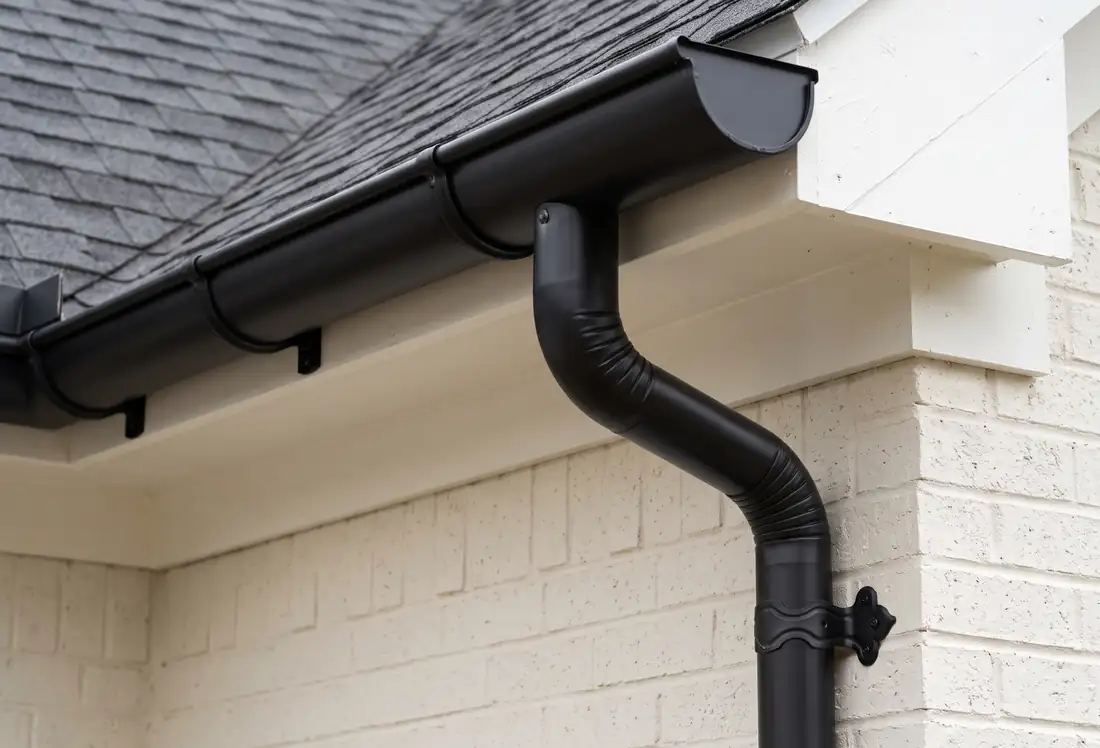
The general principle in preservation is to repair what exists and, where replacement is needed, replace in kind: same profile, similar material, same placement. Changes that alter how the house looks from the street, such as swapping half-round for K-style, copper for aluminum, removing built-in gutters, or adding downspouts on the front facade, are the kind that may need review. The commission's design guidelines are the reference; preservation staff can say whether a particular job needs a certificate and of which type.
Minor work or major work?
Exterior changes in a historic overlay district need a certificate of appropriateness. Many smaller projects are handled as minor work reviewed by staff. More substantial projects go to the COA Committee as major work, decided at a monthly hearing, according to the city. Allow time in your schedule, especially if the work is not urgent.
What often suits historic Raleigh houses
| House style | Gutter often suited |
|---|---|
| Queen Anne, Second Empire, Italianate (Oakwood) | Half-round, copper or painted; round downspouts |
| Colonial Revival (Boylan Heights, Hayes Barton) | Half-round or ogee profile; painted to trim |
| Craftsman bungalow (Five Points, Mordecai, Glenwood-Brooklyn) | Half-round or K-style painted to trim |
| Houses with built-in gutters | Restoration of the built-in system where possible |
These are general patterns, not rules. What was originally on the house, and what the guidelines and staff advise, decide it.
Storm damage in historic districts
The city publishes guidance for historic properties after a natural disaster, noting the districts covered and the steps to take. Emergency stabilization to prevent further damage is generally handled differently from permanent changes. Photograph damage before temporary repairs, and talk to preservation staff about permanent work.
Working with a contractor
Tell the contractor up front that the house is in a historic district or is a landmark. Ask for a quote that specifies profile, material, color, bracket style and downspout locations, so you can include it in any application. Contractors who work in Oakwood and Boylan Heights regularly are familiar with the process. See half-round gutters and copper gutters.
Historic districts: what Raleigh homeowners ask
| Question | Short answer |
|---|---|
| Is there a fee for a certificate of appropriateness? | The city sets application fees; staff can confirm the current amount. |
| Can emergency repairs go ahead before approval? | Stabilizing to prevent damage is generally treated differently; ask staff promptly. |
| Who applies, me or the contractor? | The property owner usually applies, often with the contractor's specifications. |
| Do the rules cover downspouts too? | Visible downspouts are part of the exterior, so changes may be reviewed. |
Where around Raleigh does this come up?
| Neighborhood or town | Why it matters there |
|---|---|
| Historic Oakwood | Local overlay with many Victorian houses |
| Boylan Heights | Local overlay on a sloping site |
| Oberlin Village | Local overlay with historic and new buildings |
Getting ready for the visit
Gather photos of the house and the existing gutters, and ask the contractor for a written specification. Contact city preservation staff early to learn which review type applies.
Built-in gutters
Some older Raleigh houses have built-in or box gutters, formed into the roof edge or hidden behind a cornice and lined with metal. They are often original and part of the house's character, but when their linings fail, water leaks straight into the cornice, walls and ceilings. Restoring a built-in gutter by relining it in kind is generally preferred over removing it and hanging an exterior gutter, which changes the roofline. It is specialist work, so ask whether the contractor has relined built-in gutters before.
The bottom line
In an overlay district or on a landmark, repair in kind where you can, and ask city preservation staff before any change you could see from the street.